
🎯 Why This Blueprint Matters
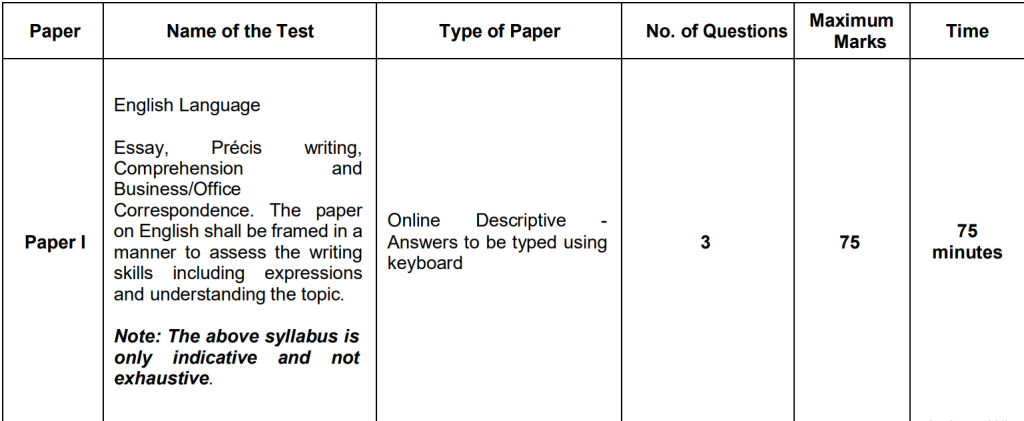
The SIDBI Grade A/B Descriptive English Paper (Phase II – 75 marks in 75 minutes) evaluates your ability to communicate effectively in professional contexts. It tests:
- Essay Writing
- Précis Writing
- Reading Comprehension
- Business / Office Correspondence (formal letters or reports)
Successful candidates aren’t just good writers—they’re clear thinkers and strategic communicators. Passing this paper positions you as a competent future SIDBI officer. This blueprint maps out a complete, week-by-week prep strategy grounded in official patterns and expert guides .
📋 Official Exam Pattern Summary
- Format: Online, typed responses
- Tasks: 4 components—Essay, Précis, Comprehension, Correspondence
- Marks: 75 total
- Time Limit: 75 minutes
🛠️ Preparation Blueprint — Week-by-Week Plan
| Week(s) | Focus Area | Key Actions |
|---|---|---|
| 1–2 | Foundation: Pattern + Content Bank | Confirm format; build topic and statistic repository (RBI, MSME, Green Banking, fintech) ; improve typing speed (35–40 WPM) | |
| 3–4 | Essay & Précis Strategy | Train structure and timing: essay (250–300 words), précis (~⅓ original) |
| 5–6 | Comprehension & Reading Techniques | Practice passages; develop skimming, paraphrasing, and inference skills |
| 7–8 | Business Correspondence (Letters & Reports) | Use official formats; practice real-world prompts |
| 9 | Full-Length Mock Simulations | Combine all four tasks under timed conditions; review using expert checklists |
| 10 | Refinement & Polish | Build template phrases; revise grammar/vocab; do speed drills; address recurring errors |
🔍 Deep Dive Modules
Weeks 1–2: Build the Bedrock
- Analyze official handouts and expert resources to confirm the four-task format .
- Collect:
- RBI repo rate trends
- MSME loan and NPA statistics
- Green banking & fintech initiatives
- Practice keyboard typing and simple drafting daily to reach 35–40 WPM—crucial to avoid time pressure .
Weeks 3–4: Master Essays & Précis
- Essay: Structure clearly—introduction, body with 3–4 paragraphs, conclusion.
- Use topical prompts: fintech, SIDBI’s MSME role, economic recovery.
- Précis: Reduce 300–400 word passages to 120–160 words while preserving tone and core message .
- Always follow timed practice: 30 mins for essays, 15 mins for précis; then self-review.
Weeks 5–6: Refine Reading Comprehension
- Engage with unseen passages from economic surveys or editorials.
- Develop:
- Quick central idea identification
- Inference-based answer skills
- Paraphrasing techniques
- Target accurate skimming for efficient comprehension and answers.
Weeks 7–8: Nail Business/Office Correspondence
- Learn formal letter structure: sender/receiver addresses, subject line, salutation, body, closing.
- Practice report formatting: title, introduction, findings, recommendations, conclusion.
- Use real-life scenarios—e.g., draft a credit scheme proposal or an NPA recovery report.
Week 9: Mock Exam Week
- Simulate the full descriptive paper in one session—75 minutes, 75 marks.
- Share your answers with peers or mentors for structured feedback.
- Use a checklist:
- Format compliance
- Word limits
- Original facts
- Consistent tone
- Grammar & punctuation accuracy
Week 10: Final Refinement
- Develop template phrases: “In conclusion”, “Further, it is recommended that…”, “Yours faithfully”.
- Maintain a vocabulary journal: synonyms, formal phrases, sector-specific terms.
- Polish with grammar tools or peer review sessions.
- Perform daily micro-drills for intros, conclusions, précis, and key formats.
⏰ Exam-Time Execution Strategy
Use this timing plan:
- Essay: 30 min
- Précis: 15 min
- Comprehension: 15 min
- Correspondence: 10 min
- Final review: 5 min
Tip: Spend the first 2–3 minutes per task outlining ideas and structure for clarity and direction.
💡 Pro Tips from Experts
- Use real-world data (like UPI growth, GST revenue, MSME loan numbers) to add authenticity.
- Write in clear, professional language—focus on readability over complexity.
- Maintain consistent timed practice frequency: minimum 1 full mock per week, increasing intensity as the exam approaches .
- Improve typing fluency with daily drills—error-free speed underpins confidence in the exam.
📚 Sample Practice Themes
- Essay: “The role of fintech in MSME revitalisation.”
- Précis: Summarize economic opinion pieces or RBI circulars.
- Comprehension: Practice with editorial articles on banking policy or social issues.
- Letter: Propose a new SIDBI lending initiative to Headquarters.
- Report: Evaluate EMI recovery performance of a small branch or NPA mitigation strategies.
🖇️ Essential Resources
- SIDBI Official Handout – Authoritative blueprint of paper format
- BankWhizz guide – Strategic approaches and timed drills
- ixamBee & OliveBoard – Topic insights, mock prompts, and descriptive question banks
🚀 Final Takeaways
Strike the perfect balance in your descriptive prep:
- 💡 Content depth: financial stats, contemporary issues
- 🧱 Structural clarity: templates for each task
- ✍️ Language finesse: error-free and professional
- ⏱️ Exam simulation: timed writing and review practice
Stick to this week-by-week blueprint, iterate over your drafts, and you’ll enter the exam not just prepared—but confident and composed.
📣 Ready to Execute?
- Download the structured 10-week planner & writing templates
- Post your toughest draft (essay, précis, comprehension, letter/report) for review
- Subscribe for weekly prompts, peer feedback & expert alerts
Let this blueprint guide your journey. With consistent effort and smart strategy, you’re set to ace SIDBI’s Descriptive English Paper 2025—make every minute count!