
Introduction
The IRDAI Grade A Phase II Descriptive English paper of 2024 maintained its standard structure, testing candidates across five major writing tasks:
- Essay Writing
- Precis Writing
- Reading Comprehension
- Letter Writing
- Statement Expansion
The exam emphasised domain knowledge, clarity of thought, structured expression, and grammar. Below is a detailed analysis (based on recall plus what the syllabus and patterns suggest), followed by strategy tips for aspirants.
1. Essay Writing
- Word Limit: ~500 words
- Topics Offered (4 choices):
- Strategies for Insurance for All by 2047 in India
- Pros and Cons of Artificial Intelligence
- The Power of Positive Thinking
- One topic not fully recalled
- Observation:
The essay topics spanned sector-specific (insurance), technological (AI), and more general/philosophical themes (positive thinking). This mix allows candidates from varied backgrounds to write confidently. - Pro Tips:
- For insurance-themed topics, include details like government schemes (e.g. Ayushman Bharat, PMFBY), IRDAI reforms, digital insurance solutions, microinsurance etc.
- For tech themes like AI, balance advantages (efficiency, automation, innovation) with risks (job displacement, bias, data privacy).
- Always use a structured essay format: Introduction → Body (multiple points with examples) → Conclusion.
- Use current data/facts/statistics (if you have) to strengthen arguments.
2. Precis Writing
- Theme: Women’s participation in the labour force and empowerment
- Expected Length: About 1/3 of original passage (≈ 170–180 words if the original is ~500)
- Focus in Passage:
- Challenges (social stigma, safety, work-life balance)
- Economic benefits of female workforce participation
- Need for policy support and societal reform
- Pro Tips:
- Use your own words; avoid copying the text.
- Maintain neutral/objective tone, not emotional.
- Give a title that captures the essence, e.g. “Women’s Economic Empowerment”.
- Be precise; avoid digression.
3. Reading Comprehension (RC)
- Topic: Data Analytics in Insurance
- Format: ~5 questions, answers in 3-5 lines each
- Nature of Questions: Mostly factual/direct based on the passage (applications like fraud detection, underwriting, risk models, personalization) rather than heavy inference.
- Pro Tips:
- Read the questions first so you know what to look for in the passage.
- Paraphrase well: you can borrow phrases, but change structure/words where possible.
- Stick to word limit in answers; avoid writing long paragraphs.
4. Letter Writing
- Types Asked: One formal, one informal Formal Letter: Write to the Commissioner about a dog menace in your society.
Informal Letter: Write to your nephew about the spread of fake news on social media. - What Was Tested:
- Tone: Formal must be official, respectful; informal can be more personal and friendly.
- Format: Salutation, subject line, body, closing. Formal letters need the conventional structure.
- Clarity of issue, request or message in the body, coherence.
- Pro Tips:
- Always begin with a subject line in formal letters.
- Use appropriate salutations & closings (“Dear Sir/Madam”, “Yours sincerely”, etc.).
- For informal, keep tone conversational but maintain clarity and relevance.
5. Statement Expansion
- Topics Given:
- Scope of CSR in India
- Ethical Leadership is the Need of the Hour
- Expectations: Expand into ~100-words: explain meaning, importance, relevance/applications, possibly future outlook.
- Pro Tips:
- Start with a clear definition of the statement.
- Give real-life or policy examples.
- Conclude with forward-looking viewpoint or how the idea should evolve.
Overall Paper Difficulty & Sectional Breakdown
| Section | Difficulty |
|---|---|
| Essay Writing | Moderate |
| Precis Writing | Moderate |
| Reading Comprehension | Easy |
| Letter Writing | Easy-Moderate |
| Statement Expansion | Moderate |
Key Insights & What Aspirants Should Note
- The exam mixed insurance/domain-specific topics with general awareness / philosophical / social themes. This means you can’t completely ignore broader issues even if your strength is in insurance/regulation.
- Precision in formal vs informal writing still matters a lot.
- Ethics, CSR, social responsibility keep reappearing in descriptive English sections of regulatory exams.
- Time management is crucial: candidates must allocate time per section well (e.g. essay takes more, precis & expansion less).
Strategy Suggestions for Future Aspirants
- Practice Diverse Essay Topics Weekly — including topics in insurance, economy, technology, society.
- Maintain Templates for formal letters, emails, complaint, policy communication etc. So writing becomes faster.
- Revision of Grammar & Formal Style — accuracy matters; avoid informal language in formal sections.
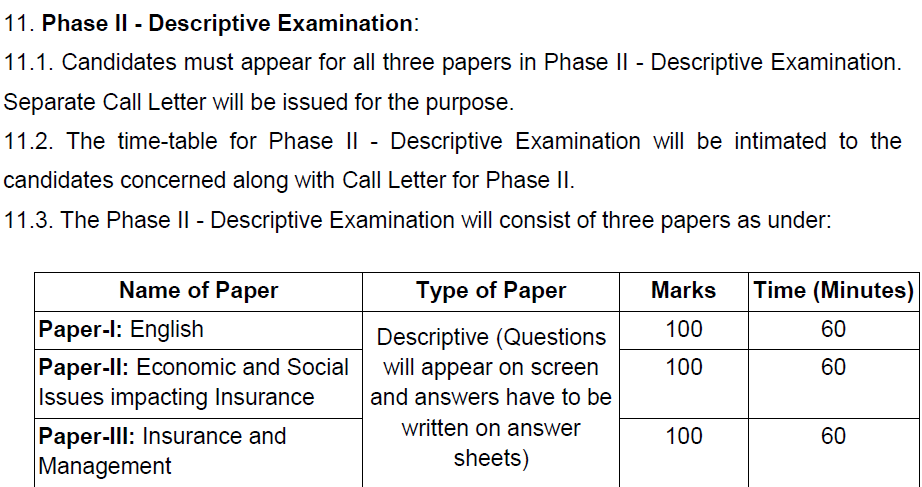
- Mock Tests Under Time Constraint — simulating the exact time (60 mins), so you get comfortable.
- Read IRDAI Reports, Insurance Journal, Editorials — helps for content, facts, recent developments for essays or domain topics.
Conclusion
The IRDAI Grade A 2024 Descriptive English paper was balanced, fair and tested more than just language — it tested awareness, structure, domain knowledge. For 2025, aspirants should build writing skills, diversify topics, polish grammar and improve speed.
Bank Whizz recommends aspirants solve past papers, enroll in peer evaluation/mocks, and maintain a daily mini-writing habit (even informal).